
The Future of Industrial Valves: Rotex’s 7 Exclusive Technologies Explained
October 16, 2026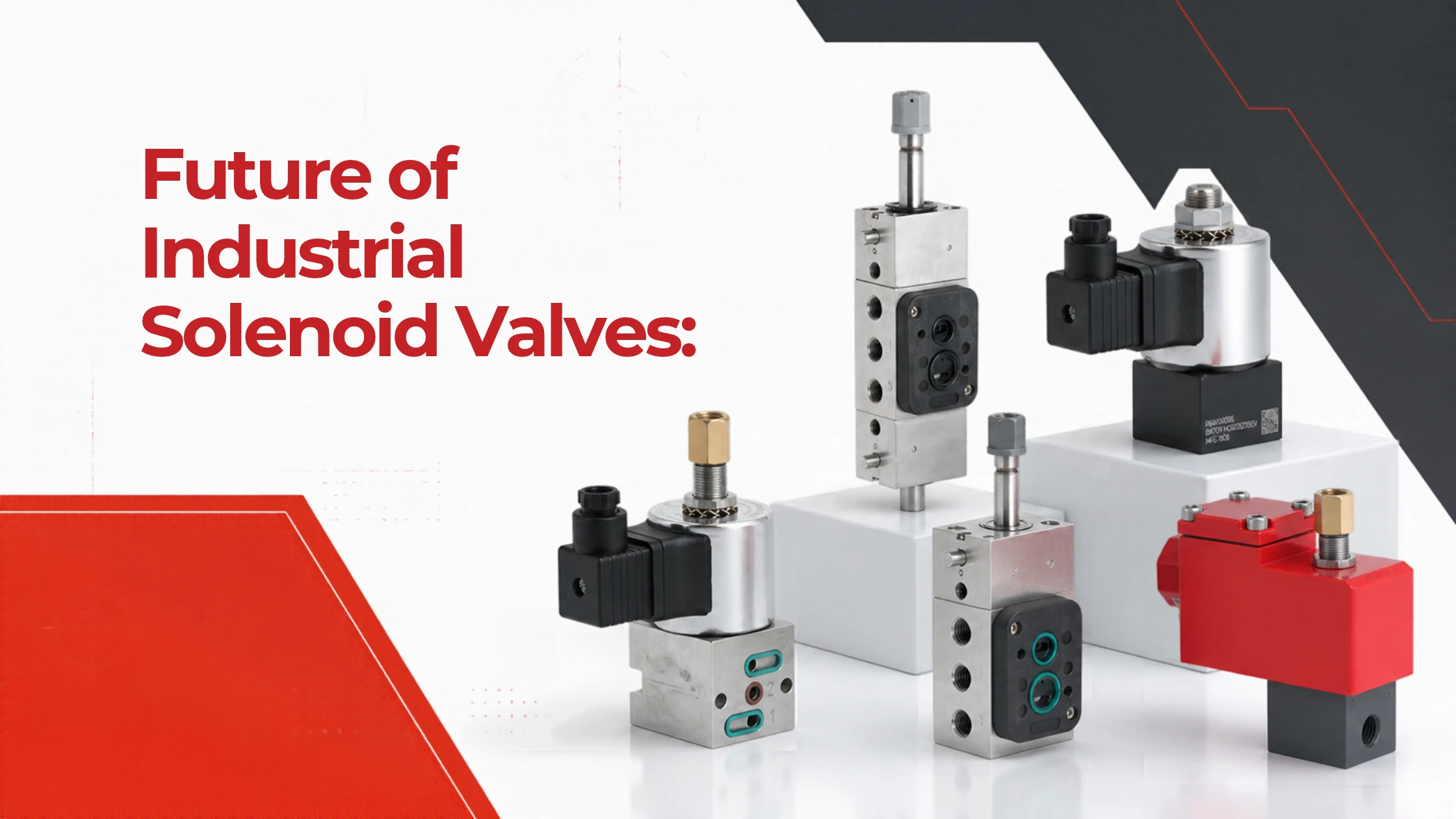
What is Changing in the Future of Industrial Valves?
Industrial valves are shifting from basic ON/OFF devices to diagnostic, predictive, and modular reliability systems. In modern oil & gas, chemicals, pharma, power, and process plants, valve performance directly impacts plant uptime, functional safety, maintenance cost, and automation reliability.
The next generation of solenoid and automation valves must:
- Communicate health status
- Support predictive maintenance
- Reduce pneumatic failure points
- Integrate with Industry 4.0 architectures
Rotex's engineering roadmap focuses on solving real field failure modes rather than improving catalogue specifications alone.
Why Industrial Valve Failures Still Cause Major Downtime
Common Field Failures in Pneumatic & Solenoid Systems
- Leakage in pneumatic lines and fittings
- Solenoid valve contamination and wear failures
- Relay, PLC output, wiring, and sensor disruptions
- Actuator corrosion due to moisture ingress
- Progressive degradation that remains undetected
Operational Impact on Plants
- Unplanned Shutdowns
- Quality Rejection & Rework
- High MTTR
- Increased Safety Risk
Industrial valves often become reliability bottlenecks instead of reliability enablers.
Rotex Engineering Philosophy: From Reactive Maintenance to Predictive Reliability
Rotex technologies are designed to deliver practical, field-proven improvements through mechanical intelligence and electro-pneumatic design — not heavy digital layers.
- Reduce pneumatic breakdowns
- Enable online diagnostics
- Improve actuator lifecycle
- Balance safety and availability
- Support Industry 4.0 adoption without complexity
Rotex's 7 Exclusive Industrial Valve Technologies
01. Modular Valve Manifold (MVM) — Compact, Skid-Ready Valve Architecture
Problem with Conventional Installations
- Multiple leak points
- Complex piping requirements
- Longer installation time
- Higher maintenance effort
MVM Engineering Concept
- Inlet/outlet pressure blocks
- Block and bleed modules
- Gauge ports
- Valve modules (1oo1, 1oo2, 2oo2, relay valves)
Engineering Outcomes
- Up to 70% panel space reduction
- Serviceable in under one minute
- Reduced air leakage
- Faster installation and replacement
Ideal for ESD skids, automation panels, and process control systems.
02. Predictive-Maintenance-Ready Solenoid Valves
Core Limitation of Conventional Solenoids
- Standard valves provide only ON/OFF electrical feedback
- Cannot detect slow response due to contamination
- Cannot detect partial stroke conditions
- Cannot detect seal wear before failure
Rotex Predictive Design
- Movement-based operational feedback
- Response time tracking
- Early degradation detection
- Condition-based maintenance planning
Diagnostic Indicators
- Increased response time → contamination buildup
- Reduced response time → seal wear
- Incomplete ON → restricted flow
- Incomplete OFF → leakage risk
Transforms conventional valves into smart diagnostic solenoid valves.
03. Patented 2oo3 Redundancy with Full Diagnostics
Safety vs Availability Trade-off
| Configuration | Advantage | Limitation |
|---|---|---|
| 1oo2 | Higher safety | Lower availability |
| 2oo2 | Higher availability | Spurious shutdown risk |
Both configurations suffer from hidden failure conditions.
Rotex 2oo3 Architecture
- Reed switch feedback on each solenoid
- Detection of failed-open and failed-close states
- Elimination of pressure-only feedback limitations
Performance Gains
- Higher reliability
- Improved safety integrity
- Reduced wiring complexity
- Lower lifecycle cost
Critical for SIS and safety-instrumented automation valves.
04. High-Reliability Intrinsically Safe (Ex ia) Solenoid Valves
Why Ex ia Valves Underperform in the Field
- Barrier power limitations
- Small pilot orifices clogging
- Long cable runs
- Incorrect entity parameter matching
Rotex Design Enhancements
- Optimized entity parameters
- Improved power-to-performance ratio
- 33% larger pilot orifice area
- Upgrade path from Ex d to Ex ia
Ensures reliable performance in hazardous area applications.
05. Actuator Life Enhancer Solenoid Valve
Root Cause of Actuator Failures
- Moisture ingress through open chambers
- Corrosion in spring and exhaust chambers
- Torque loss over time
- Seal degradation
Rotex Exhaust Purge Concept
- Low cracking-pressure NRV (~0.1 bar)
- Continuous purge with dry instrument air
- Positive pressure vs atmosphere
Results
- Prevents corrosion
- Eliminates piston jamming
- Increases actuator life by up to 50%
Applicable to scotch yoke and rack-and-pinion actuators.
06. Protective Screen for Air Contamination Control
Industry Reality
- Over 60% of solenoid failures are contamination-related
Rotex Mechanical Protection
- 80–150 micron cupped screen
- Large effective open area
- Easy cleaning without removal
Benefits
- Prevents early failures
- Visual blockage indication
- Reduces random breakdowns
A simple mechanical solution improving reliability significantly.
07. LED-Integrated Solenoid Valves for Fast Diagnostics
Maintenance Challenge in Hazardous Areas
- Opening enclosures required
- Gas clearance procedures needed
- Multimeter checks required on-site
Rotex LED Diagnostics
- LED ON → healthy supply
- LED OFF → upstream electrical issue
- Intrinsic fuse protection
- CCTV-compatible remote inspection
Operational Impact
- Reduced MTTR
- Faster fault isolation
- Safer troubleshooting
What These Technologies Mean for the Future of Industrial Valves
Next-generation industrial valves must deliver measurable improvements across safety, reliability, and diagnostics.
- Provide real-time health visibility
- Support predictive maintenance
- Integrate safety with availability
- Minimize pneumatic failure points
- Remain mechanically robust
Rotex technologies collectively enable practical Industry 4.0 valve infrastructure.
Summary: Engineering Outcomes Delivered by Rotex
These technologies enable:
- Predictive maintenance readiness
- Reduced contamination-driven failures
- Faster troubleshooting and lower MTTR
- Extended actuator and solenoid lifecycle
- Improved functional safety performance
- Compact, service-friendly installations
They represent a field-driven roadmap for industrial valve innovation.